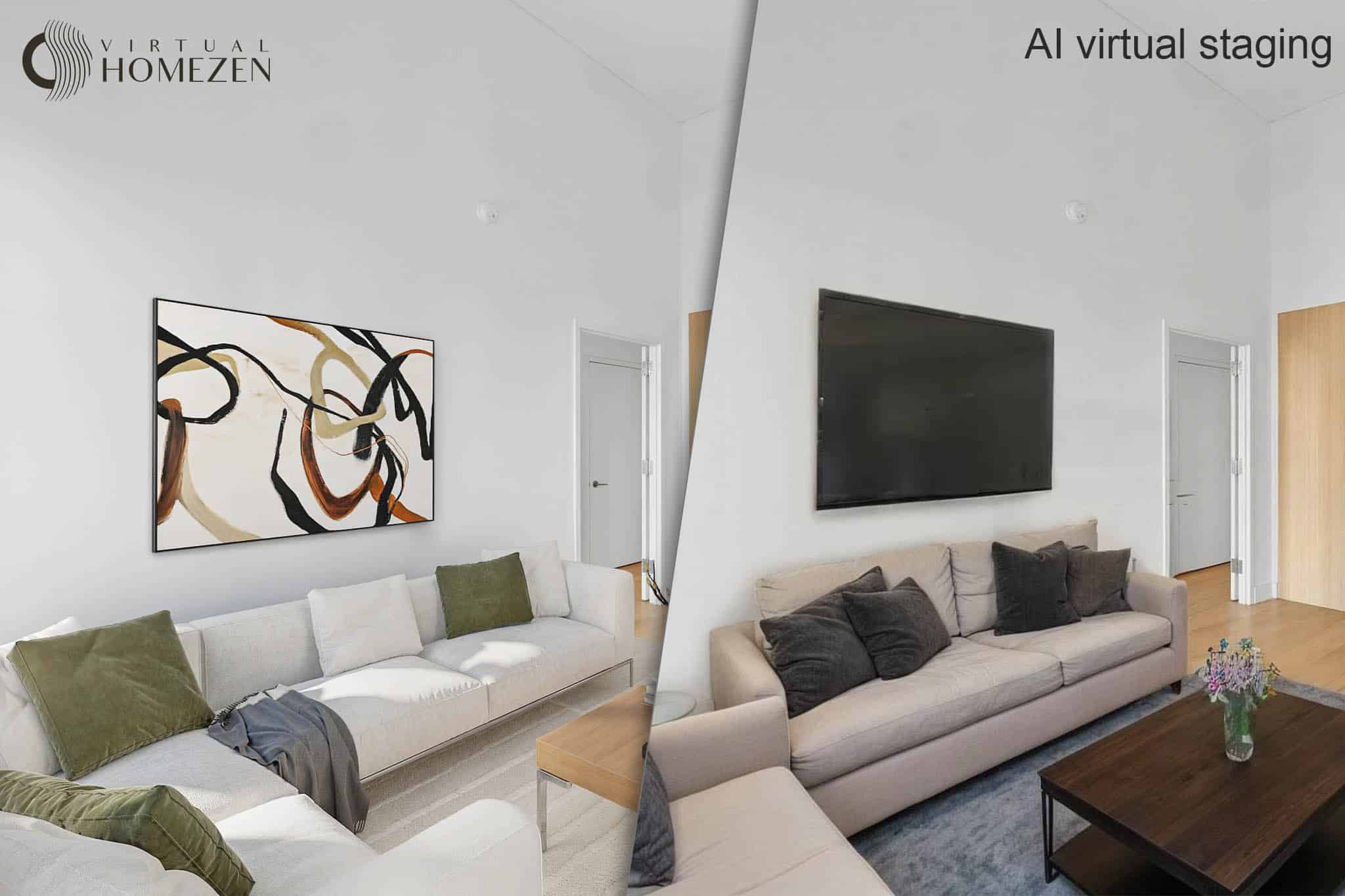


In the hyper-competitive world of real estate, making a property stand out is everything. Over the last few years, virtual staging has become a go-to tool for Realtors looking to showcase an empty home’s potential without the hefty price tag of physical furniture. Now, with the rapid rise of Artificial Intelligence (AI), generating beautifully staged rooms takes mere seconds.
But as AI virtual staging becomes more realistic and accessible, a critical question is echoing through real estate brokerages across the country: Is AI virtual staging actually MLS compliant?
The short answer is yes, but with strict caveats.
Multiple Listing Services (MLS) have rigorous rules designed to protect buyers from false advertising. If your AI-staged photos cross the line from “furnishing a room” to “altering reality,” you could face hefty fines or have your listing removed.
Here is everything you need to know to ensure your AI virtually staged photos stay 100% MLS compliant.
Understanding the Core MLS Rule: Do Not Mislead the Buyer
The National Association of Realtors (NAR) Code of Ethics, specifically Article 12, states that Realtors must present a “true picture” in their advertising and representations to the public.
Every local MLS board bases its photo guidelines on this foundational principle. The goal of an MLS is to provide accurate, reliable data. Therefore, the cardinal rule of any listing photo, whether edited by a human or generated by AI, is that it must accurately represent the property as it currently stands.
Virtual staging is perfectly legal and highly encouraged for empty spaces, provided it helps buyers visualize the layout rather than deceiving them about the property’s condition.
The 4 Golden Rules of MLS-Compliant AI Virtual Staging
To stay out of trouble with your local board, your AI staging software (or virtual staging partner) must adhere to these four specific boundaries.
1. No Structural Changes Allowed
This is the most common reason agents get penalized. You cannot use AI to alter the fixed, physical attributes of a home.
What is NOT allowed: Removing a wall to create an open concept, erasing power lines from the front yard, changing the color of the kitchen cabinets, fixing a hole in the drywall, or upgrading the flooring from carpet to hardwood.
What IS allowed: Adding virtual couches, rugs, tables, artwork, and plants to an otherwise empty room


2. Disclose, Disclose, Disclose
Transparency is your best friend. Most MLS boards require explicit disclosure if photos have been virtually staged.
Watermarks: Many boards require a watermark directly on the photo stating “Virtually Staged.”
Listing Description: You should state clearly in the public remarks: “Some images in this listing have been virtually staged.”
Photo Captions: If your MLS allows photo captions, label the specific images (e.g., “Primary Bedroom – Virtually Staged”).
3. Don’t Hide Property Defects
If a room has water damage on the ceiling or peeling paint on the window sill, placing a tall virtual bookshelf in front of it to hide the damage is a direct violation of MLS rules. Buyers will eventually tour the home in person; if they discover hidden damage, you risk losing the sale and facing an ethics complaint.
4. Provide the “Before” Photos (If Required)
Many local MLS boards now require agents to upload the original, vacant photo immediately following the virtually staged photo. This allows buyers to toggle between the staged vision and the reality of the empty room, ensuring zero confusion.
The Danger of "One-Click" AI Staging Apps
While consumer-grade AI staging apps are cheap and fast, they pose a significant compliance risk for real estate agents.
AI models are prone to “hallucinations.” When you upload a photo of a vacant room to a basic AI tool, the AI doesn’t just add furniture it often attempts to “enhance” the whole image. It might accidentally change the texture of the baseboards, smooth out a textured ceiling, alter the window frames, or change the lighting fixtures to match the new furniture.
Even if you didn’t intend to change the wall color or upgrade the light fixtures, if the AI does it automatically, you are liable for an MLS violation.
This is why relying on professional virtual staging companies that utilize AI with human oversight is vastly superior to using fully automated, unmonitored AI apps.

How VirtualHomeZen Guarantees MLS Compliance
At Virtual HomeZen, we know that your real estate license and reputation are your most valuable assets. We combine the incredible speed and photorealism of advanced AI with strict human quality control to ensure every image we deliver is 100% MLS-compliant.
When you stage your listings with us, we guarantee:
Zero structural alterations: We add beautiful furniture and decor, but we never touch the walls, floors, or fixtures.
Flawless realism: Our staging respects the natural lighting, shadows, and scale of your original photos.
Optional Watermarking: If your local board requires a “Virtually Staged” watermark, we can apply it seamlessly.
Fast Turnaround: You get the benefits of AI speed without the risk of AI errors.

Final Thoughts
Virtual staging is an incredible asset for real estate agents, but the tools and the team behind the images matter.
Relying on fully automated, one-click AI is a gamble with your MLS compliance and your reputation. The true value lies in designer-crafted virtual staging—where advanced technology is controlled by human experts who understand spatial dynamics, interior design, and strict real estate guidelines.
Yes, virtually staged photos are absolutely MLS-compliant, provided they are used to furnish a room, not fake it. By working with a professional staging team that prioritizes accuracy and transparency over automated shortcuts, you can leverage photorealistic staging to sell homes faster and for higher prices—completely risk-free.
Ready to transform your vacant listings safely and beautifully?
Send one photo and see your own room in this portfolio. $29 per image, 24-hour delivery, first one free.