

The “Uncanny Valley” is a concept in robotics and CGI where something looks almost human or real, but a few subtle details are off, causing a feeling of unease or rejection.
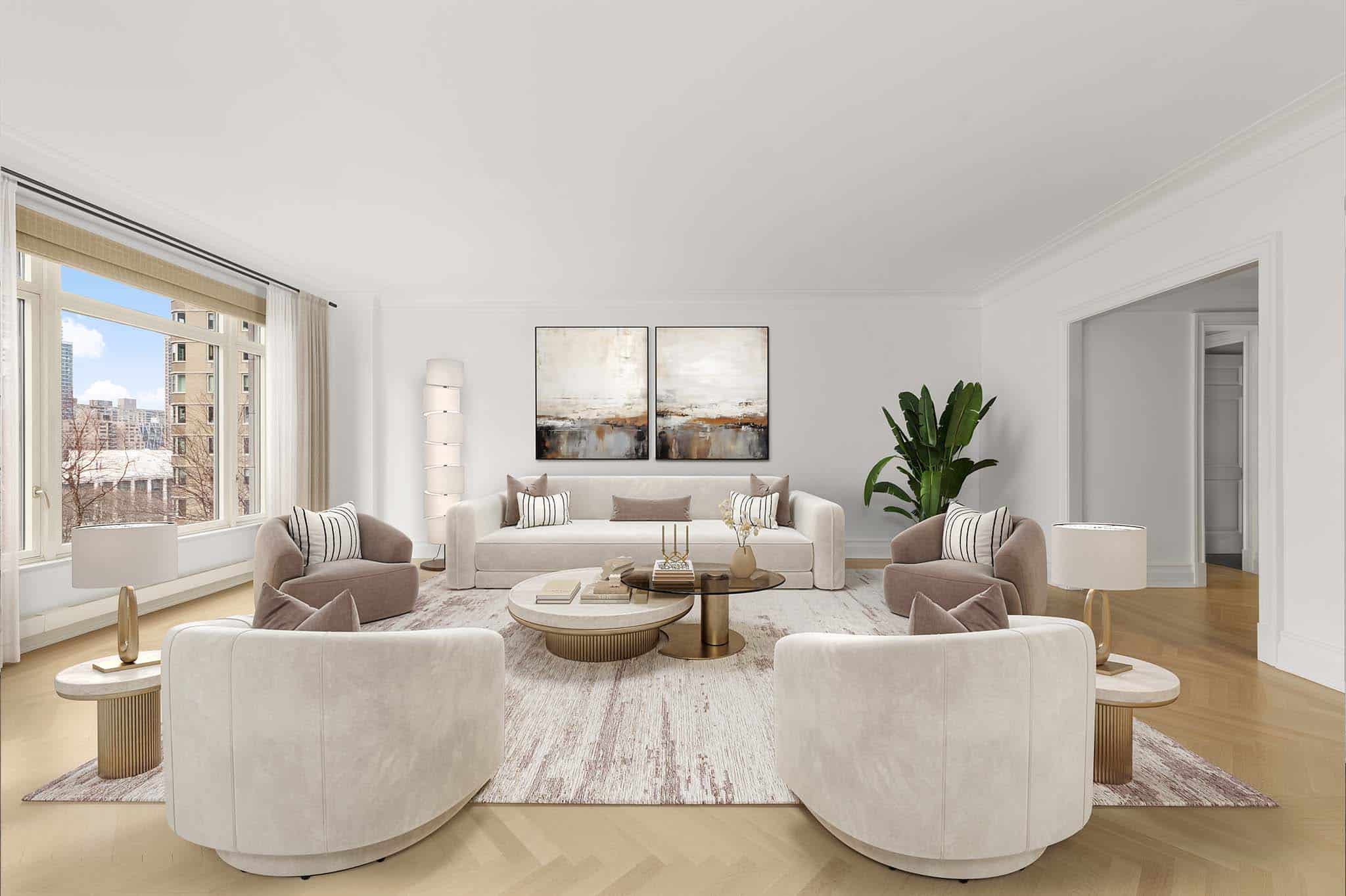
In real estate marketing, the Uncanny Valley is where most virtual staging lives.
We have all seen those listing photos. The sofa looks a bit too sharp. The rug looks like it’s hovering two inches off the floor. The sunlight on the bed doesn’t match the sunlight on the walls. Buyers might not be able to articulate why it looks fake, but their brain registers it as “artificial.” And when a buyer feels a listing is “fake,” they trust the property less.
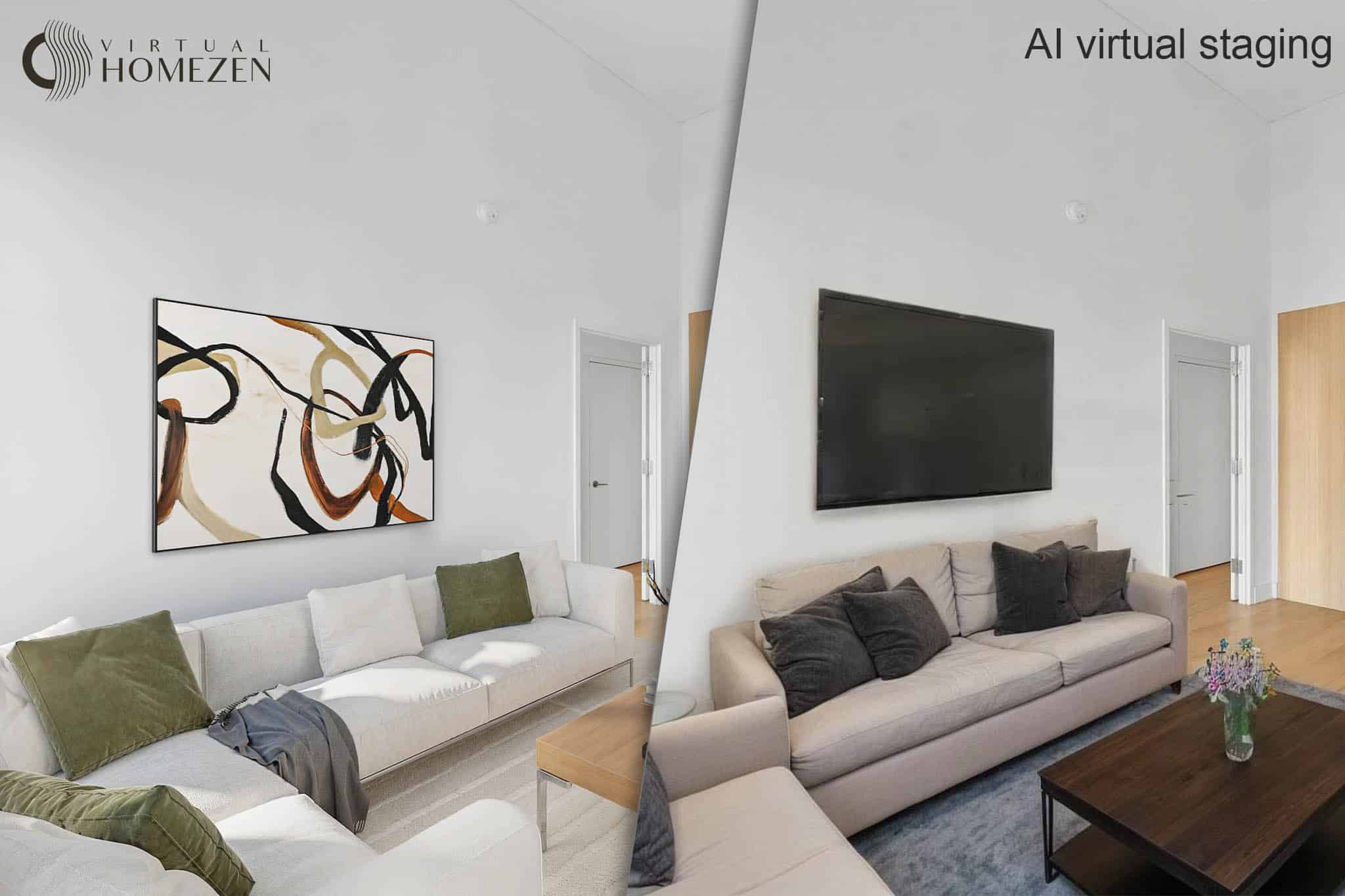
At Virtual HomeZen, we don’t just “drag and drop” furniture. We utilize the same principles used in high-end architectural visualization and film VFX to ensure our staging is indistinguishable from reality. Here is the technical breakdown of why quality matters.
1. The Importance of Ambient Occlusion (Contact Shadows)
The number one giveaway of bad virtual staging is the lack of “contact shadows.”
In the physical world, where an object (like a chair leg) touches the floor, light cannot reach, creating a dark, defined shadow. As the shadow moves away from the object, it becomes lighter and softer.
The Common Mistake: Cheap staging apps often apply a generic “drop shadow” that looks like a blurry gray blob under the furniture. This makes the furniture look like it is floating.
The Virtual HomeZen Solution: We calculate Ambient Occlusion. We ensure that the interaction between the object and the floor carries visual weight, grounding the furniture firmly in the space.


2. Texture Mapping and “Imperfection”
Real life isn’t perfect. A real velvet sofa has a “sheen” where the light hits it and darker spots in the folds. Real wood has grain that reflects light unevenly.
The Common Mistake: Using low-resolution textures that look flat or plastic. Everything looks too clean, too smooth, and too perfect.
The Virtual HomeZen Solution: We use high-definition, PBR (Physically Based Rendering) materials. These materials react to light. Our leather looks like leather; our wool rugs look fibrous. We embrace micro-imperfections because that is what makes a photo feel real.

3. Color Bleeding and Global Illumination
Light is not static; it bounces. If you have a bright red rug in a room, the sunlight hitting that rug will bounce some of that red color onto the white walls nearby. This is called “Color Bleeding.”
The Common Mistake: Ignoring light bounces. In bad staging, the furniture exists in a vacuum, not affecting the environment around it.
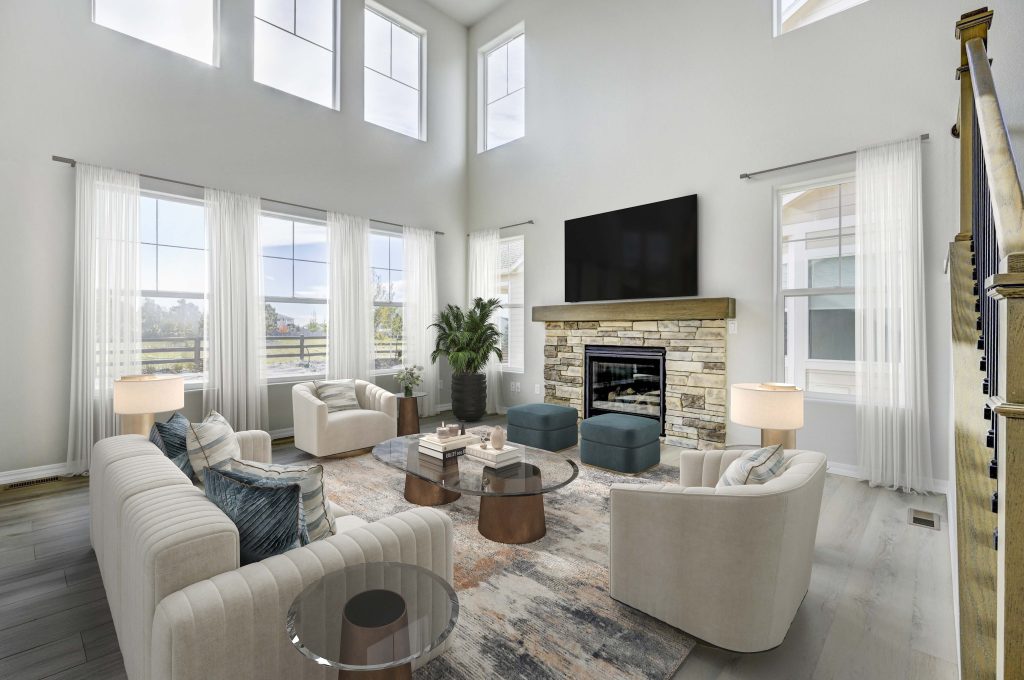
The Virtual HomeZen Solution: We utilize Global Illumination algorithms. When we place a large wooden table in a dining room, we simulate how that wood warms up the light in the entire surrounding area. This integrates the digital assets into the photo seamlessly.

4. Perspective and Camera Focal Length
Every photographer uses a specific lens—wide angle (16mm), standard (35mm), etc. If the virtual furniture is rendered at a different focal length than the original photo, the perspective will look warped.
The Virtual HomeZen Solution: Before we place a single item, we analyze the vanishing points of your image. We match our virtual camera’s grid precisely to the real camera’s position and lens distortion. This ensures that a coffee table in the foreground has the correct scale relative to the kitchen counter in the background.
Summary: Why “Good Enough” Isn’t Good Enough
In a digital age, buyers are sophisticated. They look at hundreds of images a day. They have developed a filter for “fake” content.
At Virtual HomeZen, we believe that virtual staging should enhance a property, not distract from it. By focusing on physics, light, and texture, we create images that don’t just show a furnished room—they evoke the feeling of home.
Want to see the proof? [Check out our realistic examples] in our gallery to witness how these technical details transform a listing.
Don’t settle for sticker-book staging. Experience the difference of true photorealism.